
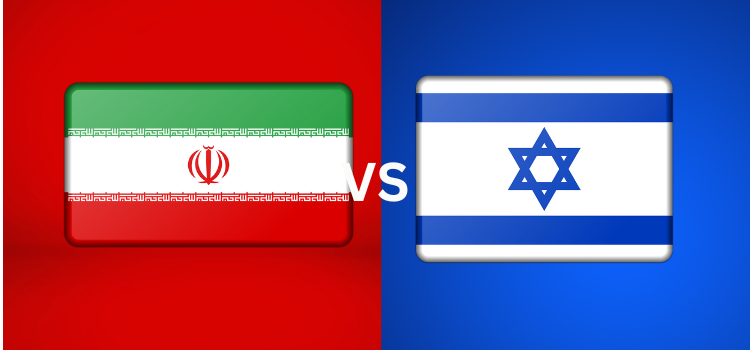
Israel-Palestine Conflict
The Israeli-Palestinian conflict probably represents one of the most profound and intricate conflicts of contemporary history. Its origin is traced back to the beginning of the 20th century and gradually developed into an incredibly complicated tangle of national, ethnic, and religious feelings.
Of greater significance more recently has been generally the involvement of the Iran in Iran-Israel conflict and for obvious reasons declared public support by the country to efforts being made by Palestinians and condemnation of the attacks launched by Israel.
Activities by Israel in Palestine
However, this quest for security and territorial integrity through military actions in the Palestinian areas has also ensured more human suffering and humanitarian crises. Life as hell has been created for most Palestinians for decades now through the occupation of the West Bank and the blockade of Gaza.
Most reports usually reveal civilian casualties multiplied after some military operations, with a mammoth destruction of infrastructure and even expulsion of families from their homes.
The authorities of Israel always have their reasons for national security, especially in cases relating to militant groups like Hamas, for military operations. However, the exculpations by Israel have seen them attract criticism from an international galaxy of organizations and human rights advocates who question why Israeli actions should inversely strike civilians more.
Protests over house demolitions, restriction of movement, denial of the most basic rights over water, and treatment for medical issues are some of the issues that ground claims to the premise of cruelty under which Palestinians allegedly suffer at the hands of the Israeli regime.
Involvement of Iran in the Palestinian Conflict
Iran has an ideological foundation for its actions on the Palestinian issue because it perceives the State of Israel as a no-right state. The country has over-emphasized its role as protector of Palestinians by providing political, monetary, and military support to several factions within Palestine, including Hamas and Islamic Jihad.
This also means giving money to invest in the infrastructure of Gaza and arming it with weapons, and this includes the arming of its supplies that may help it acquire military powers, a kind of self-defense that Tehran finds suitable to protect its cause against the threat of Israeli aggression.
At least, the Tehran case underscores an appeal for solidarity with the people of Palestine, putting their struggle on top of moral imperatives and strategic priorities in the wider struggle against the incursions of the West in the Middle East. Characteristically, politicians denounce Israeli moves as violations of international law and human rights and appeal for the liberation of Palestine from its occupation.
The Wider Implications
This already too complex geopolitical situation is complicated by such involvement at the level that Iran demonstrates in the conflict between Israel and Palestine. For example, support for Palestine through Iran forms a satisfying demand within parts of the Arab world and among Muslim populations more generally, who see it as a means of organizing resistance to oppression.
At the same time, it has brought tension among other countries, especially with Israel and the US, since Iran’s arming of militant groups is seen as a destabilizing element in the region.
The discourses that animate the Iran-Israel conflict and the future of Palestinians more generally raise some of the biggest questions in the realms of justice, sovereignty, and human rights.
Many see Iranian belligerent posturing toward Israel as fundamentally an amalgamation of pushback in one related direction from Israeli aggressiveness. Others fear it will provoke a greater bloodbath and destabilization in an already too-hot region.
Also Read: Top 5 Upcoming Technologies
Latest casualties in Iran-Israel Conflict
In 2024, the Iran-Israel conflict escalated into a series of confrontations between the two countries.
On 1 April, Israel bombed an Iranian consulate complex in Damascus, Syria, killing multiple senior Iranian officials.
In retaliation, Iran and its proxies took over the Israeli-linked ship MSC Aries and launched strikes inside Israel on 13 April. Israel subsequently carried out retaliatory strikes in Iran and Syria on 19 April.
Israeli strikes were limited, and analysts say that due to their desire to de-escalate, Iran did not retaliate with a strike, and again the proxy conflict is at this level.
Other actors, in addition to the main parties, were involved in the conflict. The United States, United Kingdom, France, and Jordan were intercepting Iranian drones actively to safeguard Israel.
Syria shot down several Israeli interceptors while Iranian proxies in the region began attacking Israel.
Tensions increased after the political leader of Hamas, Ismail Haniyeh, was assassinated on 31 July in Tehran. Haniyeh was assassinated hours after the 2024 Haret Hreik airstrike that killed Hezbollah commander Fuad Shukr. Iran and Hezbollah promised retaliation.
On 1 October 2024, Iran fired a series of missiles at Israel.

Also read: Tech in Daily Life: Make Your World Simpler
Conclusion
This makes the Iran-Israel conflict an effective narrative of past wrongs and intimate, political, and social struggles for identity, autonomy, and justice. Amidst this conflict, perhaps one could find the full web of allegiance and resistance in the stories from Iran as a supporter of Palestine and those about Israel’s militarism.
Hence, there is a huge need to put the humanistic aspect and wherever possible chances for peace in dignity and respect for all the parties with their rights on top of the agenda in the discussion so that the issue does not ferment at the international forum. In my view, this case of the Palestinian people must take its rightful place at the heart of any kind of dialogue that is aimed at a more permanent resolution against the broader geopolitical battles.


Vary well written article, 👏
dsfs